8 Browser Games and Internet Experiments Worth Trying Right Now
Eight inventive browser games newly added to Whimera, from a collaborative world canvas and crowd-driven road trip to strategy, geography, word, domino, and interface experiments.
Browser games are at their best when they do something a native app would never attempt: turn a shared map into a public canvas, let thousands of strangers steer one car, transform a CAPTCHA into a comedy game, or hide a surprisingly deep strategy system behind a single link.
We have added eight recent, high-interest picks to Whimera's Games & Experiments collection. This is not a list of disposable time-wasters. Each project has a clear idea, works directly in the browser, and earns its place through craft, originality, community energy, or unusually strong replay value.
Every new listing also includes a verified icon and a real product or gameplay cover, so you can see what you are opening before you leave Whimera.
1. Wplace — a shared pixel canvas laid over the world
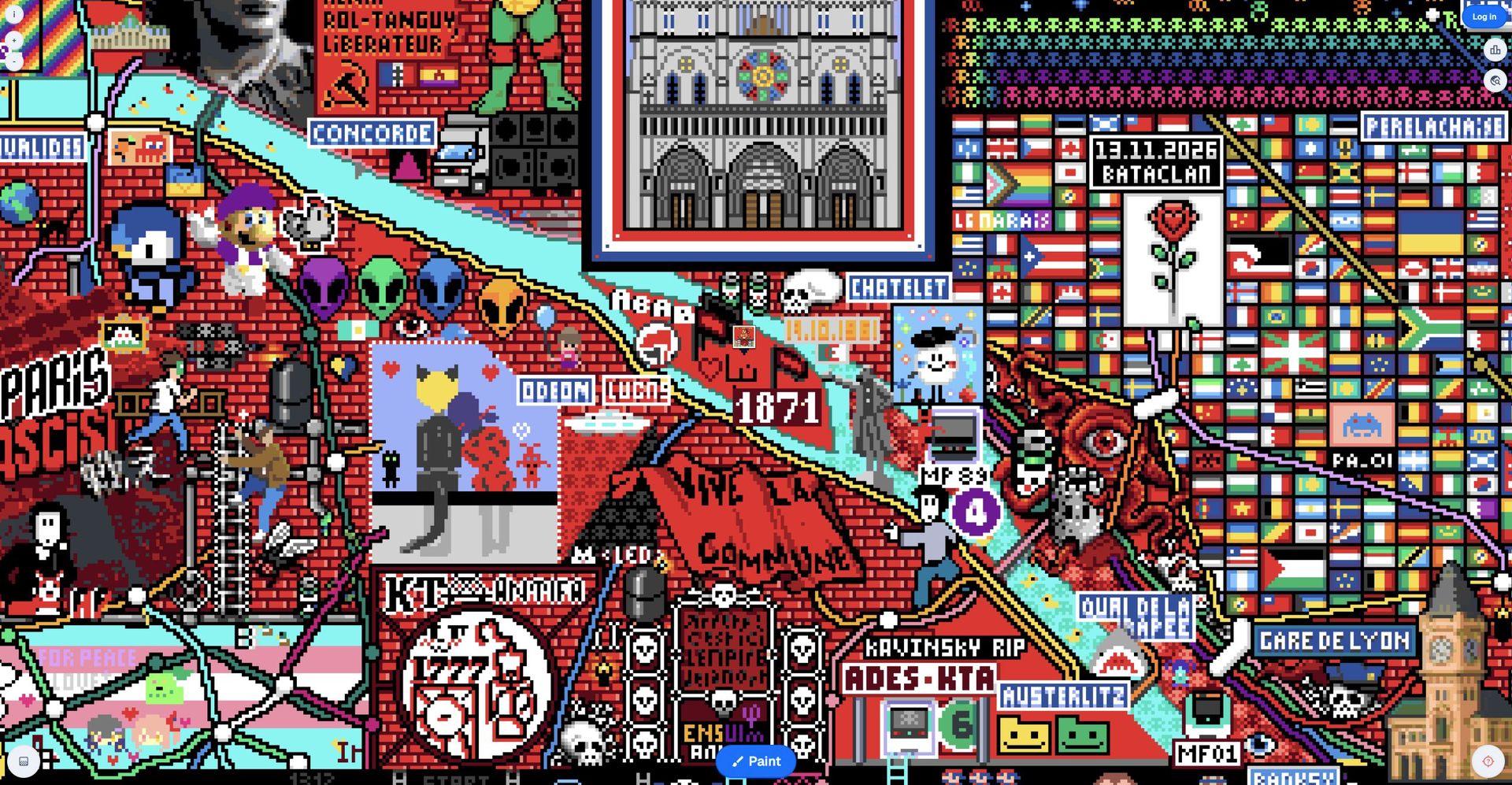
Wplace turns a world map into an enormous collaborative pixel-art surface. Pick a location, place a pixel, and contribute to a picture that may be built by a local community, a fandom, or a group of strangers defending the same tiny patch of digital territory.
The appeal is not simply drawing. Scarcity, geography, coordination, and the possibility that someone else may paint over your work create a lightweight social strategy game. Zooming around the map is also a form of discovery: every region develops its own visual language, running jokes, flags, characters, and monuments.
Why it is worth trying: Wplace gives a very simple action—placing one colored square—collective meaning. It is easy to understand in seconds, but the living map makes every visit different.
2. OpenFront — real-time territorial strategy without the install
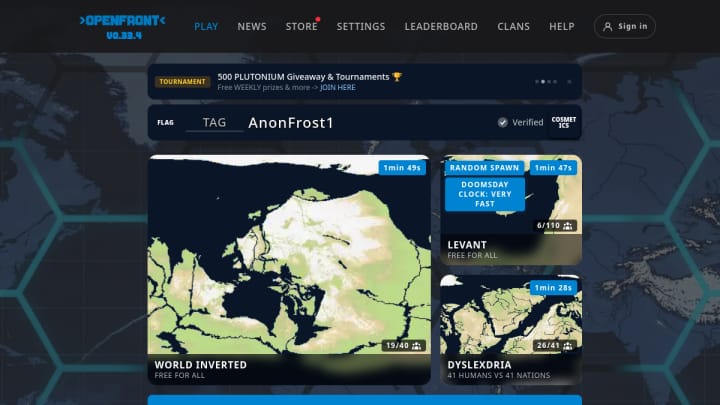
OpenFront is an open-source real-time strategy game about expanding territory, managing resources, forming temporary relationships, and surviving a map full of human opponents. It runs in the browser, but the decisions feel much closer to a full strategy game than a casual web toy.
Its strongest quality is legibility. The map gives you a quick read on who is expanding, where the borders are under pressure, and which player may soon become too powerful. That clarity lets a match generate politics naturally: neighbors cooperate, alliances become inconvenient, and a quiet corner can suddenly become the center of the conflict.
Why it is worth trying: it offers meaningful multiplayer strategy with very little setup. You can enter quickly, understand the board, and still find room for planning, deception, and comeback stories.
3. Internet Roadtrip — one car, one world, hundreds of backseat drivers
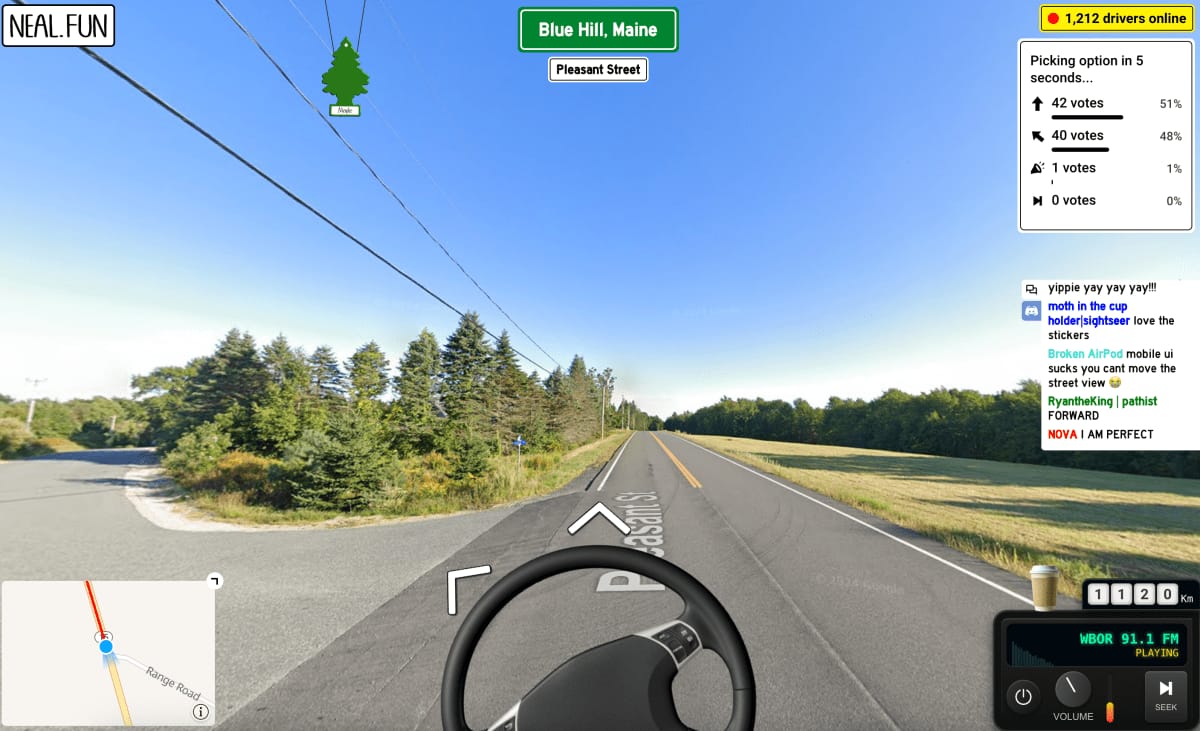
Internet Roadtrip is a collective journey built around Google Street View. Everyone sees the same road and votes on what the car should do next. The winning choice moves the group forward, while the map, local radio, chat, and constantly changing scenery turn a simple vote into a surprisingly convincing shared trip.
There is no conventional level structure and no need to optimize a score. The fun comes from emergent goals: reaching a border, escaping a parking lot, following a coastal road, or persuading a crowd to take the strange turn. It belongs to the same lineage as “Twitch Plays” experiments, but its pace is gentler and its world is the actual world.
Why it is worth trying: it creates genuine social presence from a sequence of tiny democratic decisions. You can participate actively or leave it open like a peculiar live travel channel.
Gameplay image: Neal.fun's Internet Roadtrip, as captured in [TechCrunch's coverage of the project](https://techcrunch.com/2025/05/16/thousands-of-people-have-embarked-on-a-virtual-road-trip-via-google-street-view/).
4. Clues by Sam — a daily word puzzle with a personal voice
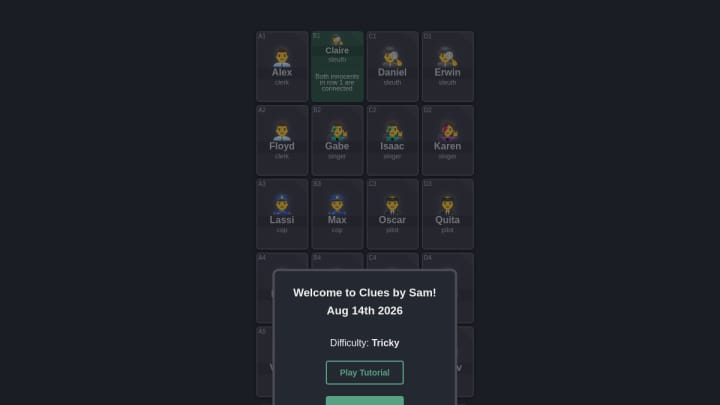
Clues by Sam is a daily word-association puzzle built around compact groups of clues. The mechanics are approachable, but the puzzle succeeds because the clue writing feels authored rather than generated from a template.
Each board asks you to notice relationships that may be linguistic, cultural, visual, or playfully indirect. That gives the solve a satisfying rhythm: first confusion, then one useful connection, followed by the moment when the remaining clues suddenly reorganize themselves in your head.
Why it is worth trying: it respects your time. A puzzle is short enough for a daily ritual, yet distinctive enough to create the “I should send this to someone” feeling that keeps good web puzzles circulating.
5. I'm Not a Robot — CAPTCHA logic pushed into absurdity
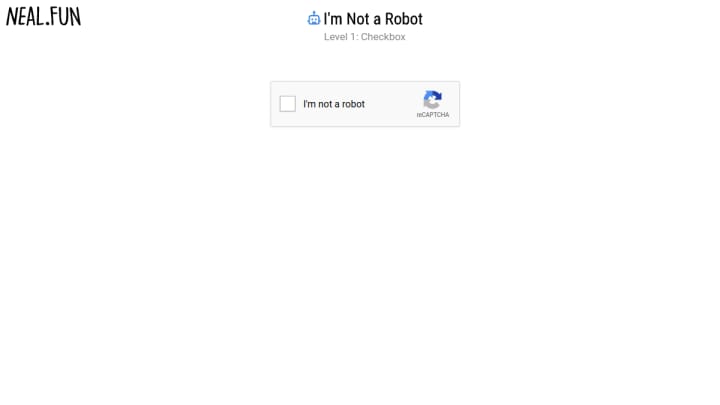
I'm Not a Robot starts with an interaction everyone recognizes and steadily turns it into something stranger. Instead of treating CAPTCHA as background friction, the game makes verification itself the central mechanic, then keeps changing what “prove you are human” is supposed to mean.
The humor works because the controls remain familiar even as the demands become unreasonable. You are never far from understanding what the game wants; the joke is discovering how far it is willing to stretch a piece of internet infrastructure we usually try to finish as quickly as possible.
Why it is worth trying: it is a sharply observed piece of interaction comedy. The game makes an everyday annoyance newly visible—and entertaining—without requiring instructions or a long commitment.
6. Stimulation Clicker — the attention economy as an escalating game

Stimulation Clicker begins with almost nothing: a plain button and a number. Click, earn stimulation, and buy upgrades. The screen then accumulates movement, counters, notifications, media, and increasingly aggressive demands for your attention.
As a clicker game, the progression is immediately readable. As a satire, the expanding interface is the point. Every purchase makes the page more “engaging” and slightly less peaceful, turning familiar design patterns into both rewards and hazards.
Why it is worth trying: the project makes its argument through interaction. You do not read an essay about overstimulation—you build the overstimulation yourself, one tempting upgrade at a time.
7. OpenGuessr — geography guessing that welcomes groups

OpenGuessr drops you into a street-level view and asks you to work out where you are. Road markings, vegetation, utility poles, language, architecture, weather, and tiny signs become evidence. Place a guess on the map, then find out how close your reasoning came to the real location.
The format is naturally replayable because the world supplies the content. It also works well socially: one person notices the road surface, another recognizes a script, and someone else remembers a regional bollard. OpenGuessr adds multiplayer-friendly options around that already strong core.
Why it is worth trying: it turns observation into a learnable skill. Early guesses may feel random, but patterns begin to stick, making later rounds both more competitive and more educational.
8. Pips — a calm domino puzzle from The New York Times
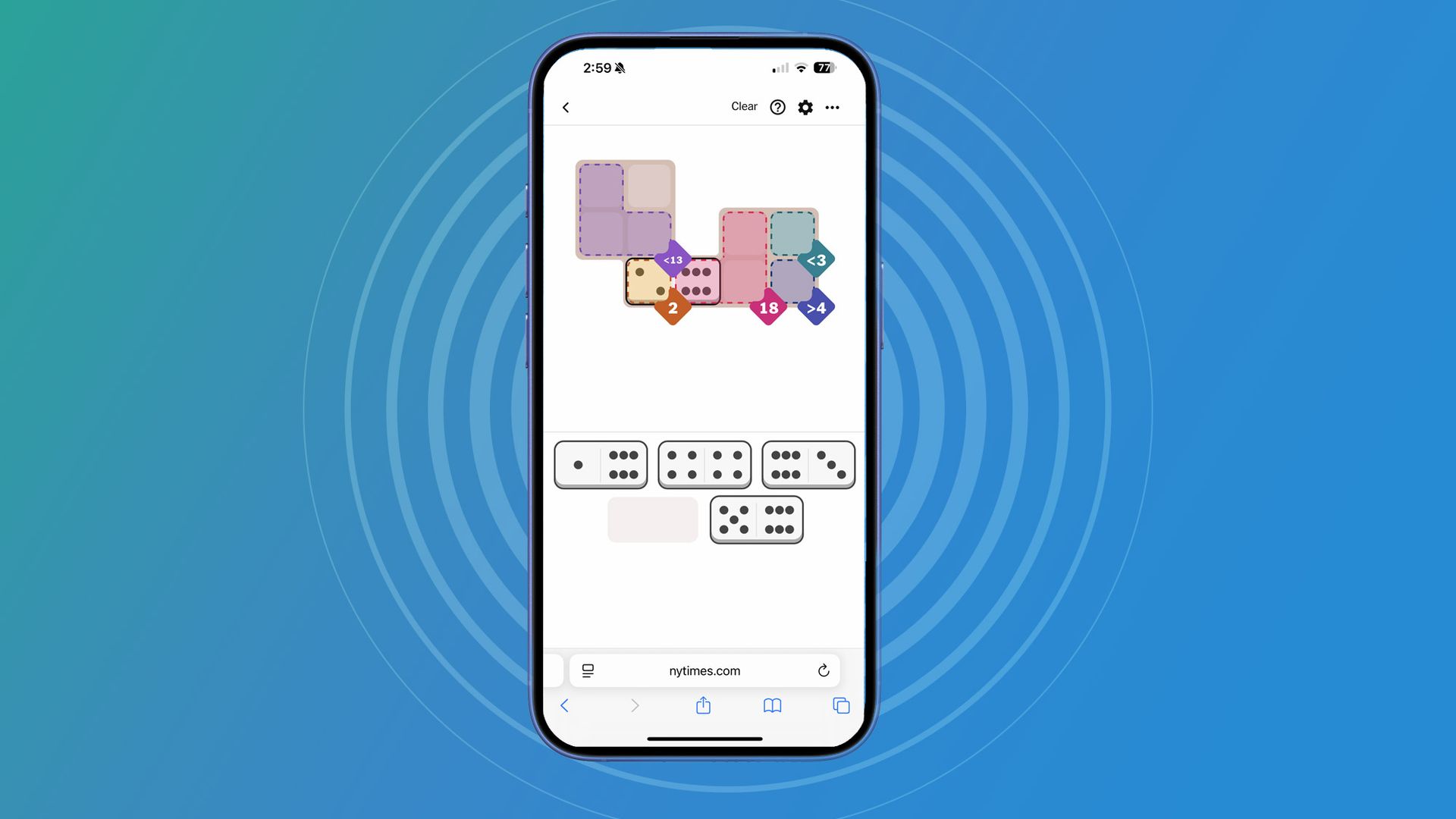
Pips is a logic puzzle built from dominoes and a small set of numerical constraints. The presentation is quiet, but the underlying deductions are substantial: a placement affects neighboring regions, pip totals, equality rules, and the few remaining spaces available to every other tile.
The result sits comfortably beside daily word and number games while feeling mechanically distinct. It rewards careful elimination more than fast reactions, and a difficult board can produce several satisfying breakthroughs before the final domino falls into place.
Why it is worth trying: Pips has the clarity of a classic newspaper puzzle with enough structural variety to support a daily habit.
Gameplay image: The New York Times' Pips, as shown in [TechRadar's coverage of the launch](https://www.techradar.com/computing/websites-apps/the-nyt-just-launched-a-new-daily-game-but-its-no-wordle).
What these eight projects have in common
These games do not share one visual style or one business model. What connects them is that the browser is essential to the idea:
- Wplace and Internet Roadtrip turn a URL into a shared public space.
- OpenFront and OpenGuessr make substantial multiplayer play immediately accessible.
- Clues by Sam and Pips show how well-crafted daily puzzles can earn repeat visits without noise.
- I'm Not a Robot and Stimulation Clicker use familiar interface patterns as the subject of the game itself.
That is the standard we want for Games & Experiments on Whimera: a clear reason to exist, a polished first experience, and enough substance that recommending the link feels worthwhile.
Explore all eight listings, or browse the wider Whimera catalog for more useful and unusual things you can open directly in your browser.